How to Calculate Your Macros: Protein, Fat and Carbs Made Simple
Once you know your calories, the next question is how to split them. The order matters: protein first, then fat, and carbohydrates fill the rest. Here is the simple method.
Written by Velion Physique. I have done nutrition coaching since 2019, alongside working as a personal trainer with five trainer licences.
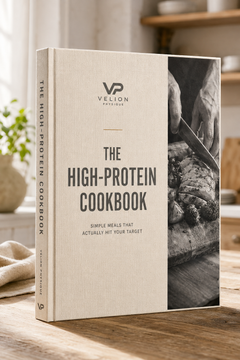
Tired of searching for recipes every time?
The High-Protein Cookbook: simple meals with protein and calories listed, shopping lists and meal prep tips – no protein powder needed. Instant PDF on your phone · $17.00
Get it – $17.00 → Look insideGet your numbers instantly: the free fitness check calculates calories, protein, fat and carbs for your goal.
What each macro gives you
| Macro | kcal per gram | Main job |
|---|---|---|
| Protein | 4 | Builds and protects muscle, keeps you full |
| Fat | 9 | Hormones, vitamin absorption, cell health |
| Carbohydrates | 4 | Energy for training and the brain |
Step 1: Set protein
For people who train: 1.6–2.2 g per kg body weight. In a calorie deficit, aim for the upper end to protect muscle. More: how much protein to build muscle.
Step 2: Set fat
At least 0.8 g per kg body weight, or roughly 25–30 % of your calories. Going much lower for long periods is not a good idea. More: how much fat per day.
Step 3: Fill the rest with carbohydrates
Subtract the calories from protein and fat from your total. Divide the rest by 4 – that is your carbohydrate target in grams.
Worked example
80 kg, goal muscle gain, 3,000 kcal per day:
- Protein: 80 × 1.8 = 145 g → 580 kcal
- Fat: 85 g (about 25 % of calories) → 765 kcal
- Carbs: (3,000 − 580 − 765) ÷ 4 = about 415 g
Do you have to track every gram?
No. Track for 1–2 weeks to get a feel for portions, then switch to a simple routine: a palm-sized protein portion at every meal, some healthy fat, and carbs adjusted to how hard you train that day. Hitting protein and total calories matters far more than the exact carb-to-fat ratio.
Next steps
Find your calories first: how many calories you need · why carbs matter for muscle: carbs and muscle growth · hitting protein easily: high-protein foods list.
Meals with the macros already worked out: the High-Protein Cookbook.
General information, not medical or dietetic advice. With kidney disease, diabetes or other medical conditions, discuss your intake with a doctor or dietitian.
→ See all high-protein recipes (250+ dishes)
All the recipes in one place
The High-Protein Cookbook: simple meals with protein and calories listed, shopping lists and meal prep tips – no protein powder needed. Instant PDF on your phone · $17.00
Get it – $17.00 → Look inside→ Take the Sit Score: how hard is your workday on your body?
→ Free week plan with shopping list
→ Training plan finder
→ All guides and recipes